
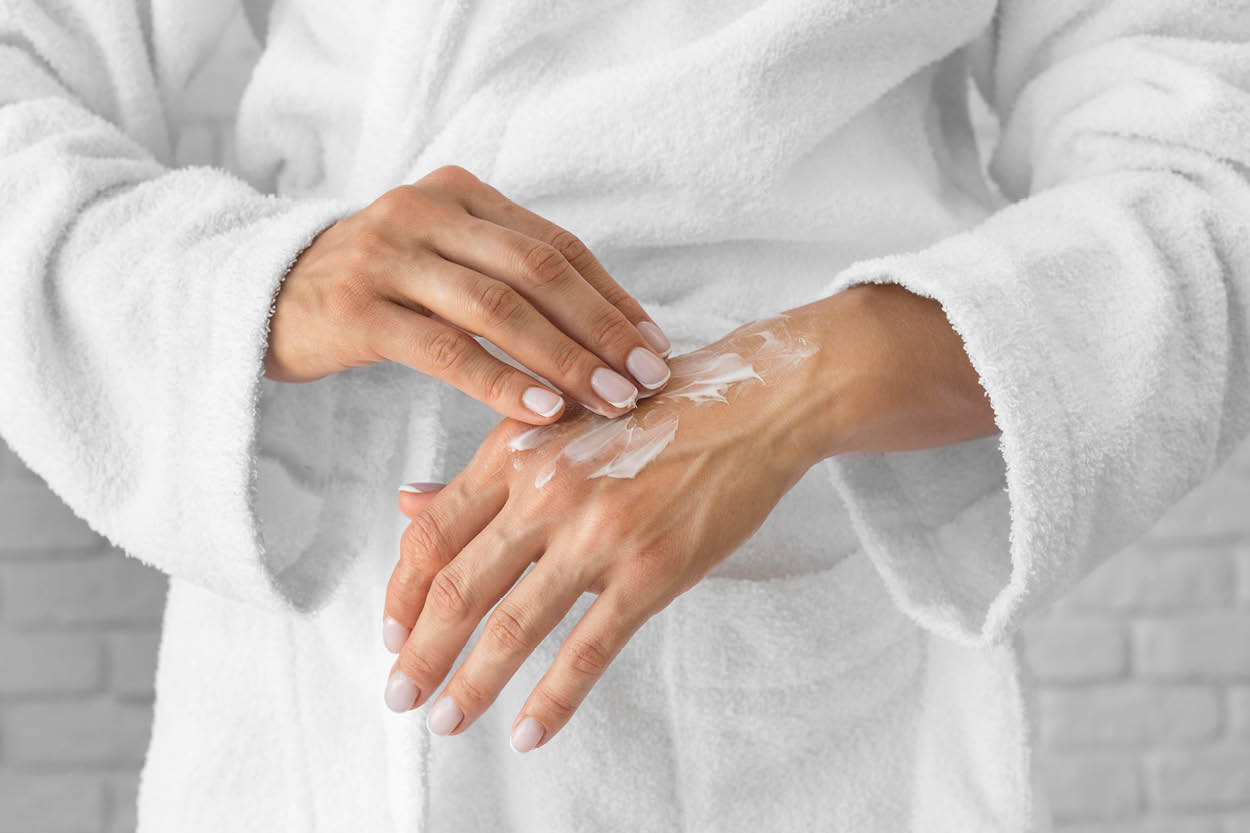
Does your skin feel tight, flaky, or uncomfortably dry as the cold weather sets in? You're not alone. Winter's harsh conditions can take a toll on everyone's skin. Winter air lacks humidity, which naturally draws moisture away from your skin. When you turn up the heat indoors, it creates an even drier environment. If you're receiving chemotherapy or radiation therapy, your skin is already working harder to stay healthy. These treatments can alter how your skin behaves, making it feel drier, more sensitive, or simply different from its previous state.
Your skin does more than you might realize. It protects you from infections and helps regulate your body temperature. When cancer treatment begins to affect this protective barrier, maintaining your skin's health becomes even more crucial. Dry, cracked skin can be painful and uncomfortable, and it can even create openings that allow bacteria to enter. That's why our Astera Cancer Care team emphasizes skincare as part of your overall treatment plan.
Minor changes to your daily routine can make a big difference. Instead of taking hot showers that feel good in the moment but strip your skin of its natural oils, try switching to lukewarm water. When washing your face or taking a bath, use gentle, fragrance-free cleansers that won't irritate your already sensitive skin. After patting yourself dry, apply moisturizer immediately while your skin is still slightly damp. Choose thicker creams or ointments instead of thin lotions. They might feel heavier, but they work better at keeping your skin hydrated throughout the day.
Simple Daily Habits:
- Drink plenty of water throughout the day
- Run a humidifier in your bedroom at night to put moisture back into the air
- Wear soft cotton clothing that feels gentle against your skin
- Keep your home at a comfortable temperature rather than overheating
- Apply moisturizer multiple times a day
Consider hydration as a process that occurs both internally and externally. Sipping water regularly helps your whole body, including your skin.
Protecting Yourself in Cold Weather:
- Wear gloves before going outside
- Wrap a soft scarf around your face if it's windy
- Apply sunscreen on exposed areas, UV rays still reach you in winter
- Avoid products with harsh chemicals, strong fragrances, or rough scrubs
One important note: If you're receiving radiation therapy, please consult with your Astera Cancer Care team before applying anything to the treatment area. Some ingredients in lotions and creams can make your skin more sensitive to radiation. Your care team can recommend specific products that are safe to use.
You don't need an expensive skincare routine or a bathroom full of products. What matters most is being gentle and consistent. Think of moisturizing like taking your medications, something you do regularly because it helps you feel better. The few minutes you spend caring for your skin each day can help you stay comfortable and prevent more significant problems down the road.
Winter and cancer treatment are both challenging on their own. Together, they require a little extra attention to your skin. However, with simple, consistent care and support from your team, you can maintain your skin's health and comfort to the greatest extent possible. If you have questions about skin changes you're experiencing or would like personalized recommendations, please contact Astera Cancer Care.